
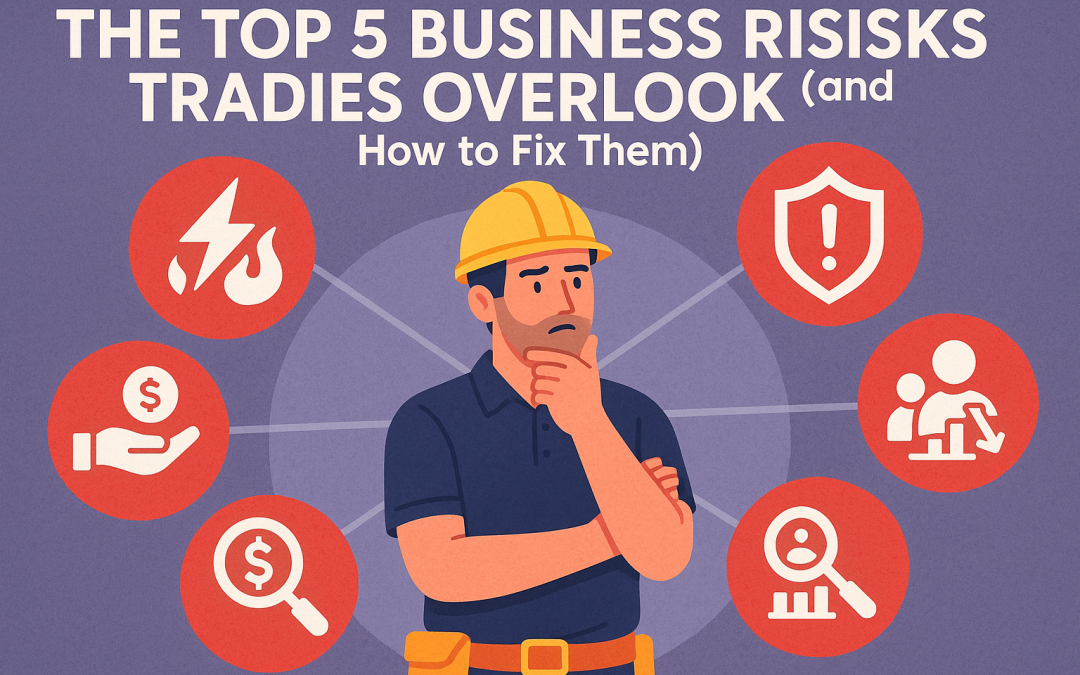
Introduction: Tradies Are Great on the Tools — But What About in the Office?
Most tradies are brilliant at what they do — whether it’s wiring, plumbing, painting, or building. You know how to fix a leaky tap, install a switchboard, or frame up a house in your sleep.
But here’s the hard truth: many Aussie trade businesses fail, not because of poor work, but because of poor business management and risk planning.
In the trade world, you face risks every day — some you can see (like a dodgy ladder), and others you can’t (like a client not paying or a cyber scam cleaning out your account).
Experts from The Finance Shed sums it up well:
“Tradies don’t go broke from one bad job. They go broke from the risks they didn’t plan for.”
This article breaks down the five biggest business risks tradies overlook — and, more importantly, how to fix them before they cost you your business, your savings, or your sanity.
1. Cashflow Chaos — The Silent Business Killer
Cashflow isn’t just about money coming in — it’s the timing, consistency, and management of it. And for Business Risks Tradies Overlook, it’s the number one risk.
The Problem:
You finish jobs, but clients pay late. You’ve got bills, BAS, and fuel to cover in the meantime. Your cashflow dips, and suddenly you’re borrowing or using credit cards to survive.
Many business risks tradies overlook for strong sales but still struggle to stay afloat because of poor cashflow systems.
The Fix:
- Use cloud accounting apps like Xero, MYOB, or QuickBooks. Send invoices instantly and set up automatic reminders.
- Add payment links to invoices — make it easy for clients to pay on the spot.
- Build a cash buffer (at least one month’s operating costs).
- Separate your accounts — one for business, one for tax, one for savings.
- Forecast your BAS and GST — don’t get caught by surprise every quarter.
“Cashflow isn’t about how much you earn — it’s about how well you manage what comes in and goes out.”
2. Insurance Gaps — Being Undercovered (or Not Covered at All)
Most tradies wouldn’t dream of leaving their tools on site overnight — but many leave their business and income completely unprotected.
The Problem:
You might have public liability because a site demands it, but what about:
- Income protection if you’re injured?
- Tool insurance if your gear gets stolen?
- Vehicle insurance that covers commercial use?
- Life or TPD cover for your family’s security?
Without the right mix of cover, one accident, theft, or illness can wipe out years of hard work.
The Fix:
- Get a professional insurance review — not all policies cover self-employed tradies.
- Make sure your vehicle and tool insurance are business-rated.
- Add income protection — it’s your self-employed sick leave.
- Review life and TPD insurance inside your super to protect your family.
Estimated costs:
- Public Liability: from $40/month
- Income Protection: from $100/month
- Tool Insurance: from $25/month
These aren’t expenses — they’re your safety nets.
3. Compliance and Record-Keeping — The ATO Doesn’t Do “She’ll Be Right”
Business Risks Tradies Overlook are great with materials and measurements but often sloppy with numbers. Many small trade businesses still operate partly in the cash economy or keep messy books.
The Problem:
- Late BAS or super payments can trigger ATO penalties.
- Missing receipts reduce your deductions and inflate your tax bill.
- Disorganised books make it harder to get finance or sell the business later.
The Fix:
- Move to digital bookkeeping — ditch the shoebox receipts.
- Keep your ABN, GST, and BAS up to date.
- Pay superannuation on time — it’s a legal must for employees.
- Hire a good bookkeeper or accountant who understands trade businesses.
Good records aren’t just about compliance — they’re about credibility. Clean digital books help you get loans, impress clients, and prove your business value.
4. Customer Concentration — Relying Too Heavily on One Big Client
A lot of tradies fall into the trap of relying on a single big builder or government contract. It feels safe — steady work, steady invoices — until that client cancels or delays payment.
The Problem:
When one client makes up 60–80% of your income, your entire business is at risk.
If they go under, delay payments, or simply stop sending work, you could be left high and dry overnight.
Experts warns:
“If one customer sneezes and your business catches a cold, you’re too dependent.”
The Fix:
- Diversify your client base. No single client should represent more than 25–30% of your total income.
- Keep marketing — even when you’re busy.
- Create a mix of clients — small cashflow jobs plus a few big ones for stability.
- Have contracts with clear payment terms and enforce them.
A balanced client list means one bad payer won’t take your business down.
5. Cyber and Data Risks — The New Frontier for Tradies
You might think hackers only target big corporations, but tradies are increasingly being scammed.
The Problem:
Emails are intercepted, fake invoices sent, or your business data (client lists, quotes, invoices) is stolen.
One scam or data loss incident can cost thousands and damage your reputation.
Common cyber threats for tradies:
- Fake invoice scams (“update bank details” emails)
- Hacked payment accounts
- Lost phones with business apps logged in
- Ransomware locking up your client data
The Fix:
- Use two-factor authentication on your email and banking apps.
- Keep invoicing and records in the cloud — safer than local storage.
- Never send or confirm bank details via plain email.
- Educate your staff or subcontractors about phishing scams.
- Consider cyber liability insurance — it’s becoming essential.
Cyber protection isn’t just an IT issue — it’s a business continuity issue.
Bonus Risk: No Exit Plan
Many tradies work for decades but never think about what happens when they want to retire or sell. Without clean financials, proper insurance, and a diversified client base, your business has little resale value.
The fix? Start early.
Plan your exit with CARE Model — build your Assets, manage Cashflow, reduce Risk, and create an Exit strategy that rewards your hard work.
Expert’s Take — “You Can’t Eliminate Risk, But You Can Control It”
Expert from The Finance Shed has seen both sides — tradies who built strong, sustainable businesses and those who went under because of avoidable risks.
“Risk isn’t the enemy — ignoring it is.
The best tradies aren’t just good on the tools — they’re smart with money, systems, and safety nets.”
Managing business risk doesn’t mean being paranoid. It means being prepared, so one bad week doesn’t destroy years of effort.
Conclusion:
You wouldn’t start a job without checking your safety gear. So don’t run your business without checking your financial protection.
By addressing these five overlooked risks — cashflow, insurance, compliance, client dependency, and cyber threats — you’re not just protecting your income, you’re building a future-proof business.
Small steps today — setting up digital bookkeeping, reviewing insurance, diversifying clients — can save you from major stress tomorrow.